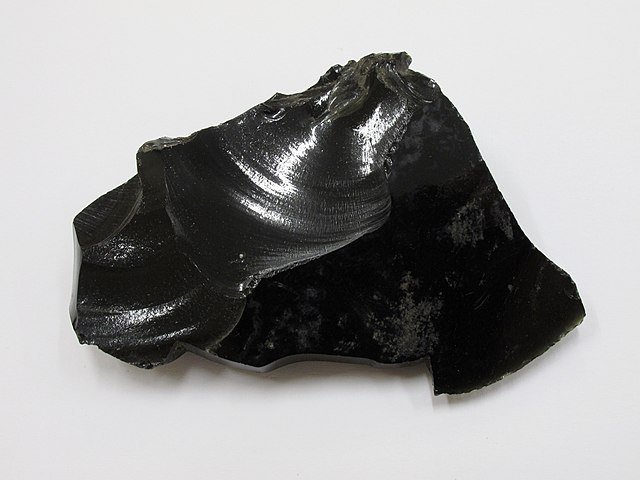
Obsidian. The name itself conjures images of ancient mysteries and razor-sharp edges. But this isn't just a rock from history books or a fantasy novel; it's a naturally occurring volcanic glass whose uses and importance span millennia, from the earliest human tools to cutting-edge modern technology. Far from being a mere relic, obsidian continues to fascinate and serve, bridging our ancestral past with the demands of our present and future.
At a Glance: Why Obsidian Matters
- Ancient Innovation: The world's first super-sharp surgical tools and weapons.
- Modern Precision: Used today in ultra-fine surgical scalpels and industrial cutting.
- Artistic Beauty: Valued for jewelry, sculptures, and elegant home decor.
- Spiritual Significance: Believed to be a powerful protective and grounding stone.
- Scientific Clues: Helps archaeologists and geologists understand ancient trade and volcanic activity.
- Unique Properties: Formed from rapidly cooled lava, giving it a distinct glassy texture and exceptional sharpness when fractured.
What is Obsidian, Anyway? A Glimpse into its Volcanic Origins
Before we dive into its incredible utility, let's get a handle on what obsidian actually is. Imagine a volcano erupting, molten rock (lava) flowing across the landscape. Now, picture that lava cooling not slowly, allowing crystals to form, but almost instantaneously, perhaps by flowing into water or cooling quickly in the air. When this happens, the lava solidifies into a glass rather than a crystalline rock. That’s obsidian.
Geologically, obsidian is classified as a mineraloid because, unlike true minerals, it lacks a defined crystal structure. It’s essentially natural glass, often jet-black and strikingly glossy, though mineral inclusions can lend it hues of brown, red, green, or even iridescent shimmer (known as rainbow obsidian). Its most defining characteristic is its conchoidal fracture—when struck, it breaks into pieces with smooth, curved edges that can be incredibly sharp, far sharper than many modern metals. With a Mohs hardness of 5–5.5, it's tougher than window glass but softer than quartz, making it workable yet durable enough for countless applications.
A Journey Through Time: Obsidian's Ancient Significance
For early humans, obsidian was nothing short of a miracle material. Its inherent sharpness and relatively easy workability (through flintknapping techniques) made it an invaluable resource, propelling technological and cultural advancements across continents.
Prehistoric Toolmaking Mastery: The Ultimate Edge
From the Stone Age onward, obsidian was the material of choice for crafting the sharpest tools and weapons. Picture an arrowhead so finely crafted it could pierce the toughest hide, or a spear point that ensured a successful hunt. Archaeological sites around the world yield abundant evidence of obsidian knives, scrapers, and points, testifying to their widespread use. These tools weren't just sharp; their edges could be microscopically thin, often just a few molecules wide, giving them an unparalleled cutting ability crucial for survival.
Ancient Surgical Instruments: A Cut Above
Perhaps one of the most astonishing historical uses of obsidian was in surgery. Civilizations like the Aztecs and Mayans were master obsidian knappers, creating sophisticated surgical scalpels. These ancient blades were revolutionary; studies have shown that obsidian scalpels could achieve an edge three to five times sharper than even modern surgical steel. This allowed for incredibly precise incisions, which, in turn, likely led to less tissue damage and potentially faster healing times for patients in an era without advanced medicine. The ability to perform delicate procedures, from ritualistic bloodletting to more complex operations, speaks volumes about its "importance."
Ceremonial and Spiritual Artifacts: Bridging Worlds
Beyond the practical, obsidian held profound spiritual and ceremonial significance for many ancient cultures. Its intense blackness and reflective quality were often associated with the unknown, the underworld, and the spirit realm. It was fashioned into ceremonial daggers, ritualistic offerings, and sacred carvings used in religious rites and to communicate with deities or ancestors. The power and mystique of obsidian made it a natural choice for objects meant to bridge the gap between the mundane and the divine.
Ornaments and Adornments: Beauty and Protection
Obsidian wasn't just for utility or ritual; its striking appearance made it a prized material for personal adornment. Ancient artisans crafted beautiful beads, pendants, and other jewelry from polished obsidian. These items were not merely decorative; they often carried symbolic weight, believed to offer protection, signify status, or embody spiritual power for the wearer.
The Power of the Obsidian Mirror: Scrying and Divination
One of the most enigmatic uses of obsidian was in the creation of highly polished mirrors. These weren't for checking your reflection, but for divination and scrying—practices aimed at gaining insight into the past, present, or future by gazing into a reflective surface. Used by priests, shamans, and seers, obsidian mirrors were believed to be portals, revealing hidden truths, aiding in communication with spirits, or facilitating deep introspection during meditation. The famous Aztec mirror of Tezcatlipoca, the "Smoking Mirror" god, exemplifies this powerful association.
A Valued Commodity: Trade and Influence
In regions where obsidian was naturally abundant, it became a crucial resource. In areas where it was scarce, it transformed into a highly valued trade commodity. Archaeological evidence of obsidian artifacts found far from their geological sources has provided invaluable data about ancient trade routes, cultural exchanges, and economic networks. By analyzing the unique chemical "fingerprints" of obsidian from different volcanic flows, researchers can trace the movement of this material, mapping out the intricate web of interactions that defined ancient societies. This aspect is also relevant to how we might see obsidian appear in less realistic contexts, for instance, when exploring how to construct something like an obsidian generator in Minecraft, where its perceived rarity or unique properties drive its virtual value.
Beyond the Blade: Modern Uses of Obsidian
While we no longer rely on obsidian for everyday knives or spear points, its unique properties continue to find specialized and increasingly sophisticated applications in the modern world.
Cutting-Edge Surgical Scalpels: The Return of the Ultra-Fine Edge
In a fascinating full-circle moment, obsidian has returned to the operating room. Modern obsidian scalpels, crafted with state-of-the-art precision, are utilized in specialized surgical fields, particularly where ultra-fine and precise incisions are critical. Think neurosurgery, ophthalmic surgery, and plastic surgery. The molecularly thin edge of an obsidian blade creates a cleaner cut with less lateral tissue damage compared to even the sharpest stainless-steel scalpels. This can lead to reduced scarring, faster healing, and less post-operative discomfort for patients, making it a valuable tool for delicate procedures.
Jewelry and Aesthetic Appeal: Nature's Dark Allure
Obsidian's striking beauty makes it a perennial favorite in the world of jewelry. Its deep, often glossy black serves as a dramatic backdrop for other stones or stands powerfully on its own. Varieties like Rainbow Obsidian, with its mesmerizing iridescent sheen, or Snowflake Obsidian, peppered with delicate white mineral inclusions, are particularly sought after. Whether fashioned into elegant pendants, sleek rings, or bold bracelets, obsidian jewelry appeals not only for its aesthetic charm but also for its perceived protective and grounding metaphysical qualities.
Artistic and Decorative Applications: Elegance in Stone
Artists and sculptors appreciate obsidian for its workability and dramatic appearance, carving it into statues, decorative objects, and intricate designs. Beyond fine art, polished obsidian slabs are making their way into contemporary interior design. Imagine a sleek obsidian countertop, a statement tile, or an accent piece in home décor. Its natural elegance and deep luster can add a touch of sophistication and grounding energy to any space. In Feng Shui, obsidian is often strategically placed to absorb negative energy, create protective barriers, and promote a sense of security and stability within a home or office.
Industrial Precision Tools: Sharpness for Specialized Tasks
The same exceptional sharpness that made obsidian vital for ancient hunters and surgeons still has industrial applications today. In niche fields requiring extreme precision, obsidian can be utilized for specialized cutting tools. While not common in mass manufacturing, its ability to create an incredibly fine edge makes it valuable for specific tasks where other materials fall short, such as in micro-cutting for electronics or in laboratories requiring ultra-sharp, non-contaminating blades.
Unlocking Earth's Secrets: Scientific Research
Obsidian continues to be a crucial tool for scientific understanding, particularly in the fields of archaeology and geology.
- Archaeological Detective Work: Archaeologists use obsidian "fingerprinting" (analyzing its unique chemical composition) to trace the origin of ancient artifacts. This allows them to map ancient trade networks, migration patterns, and cultural diffusion, revealing how different groups interacted and exchanged goods and ideas across vast distances.
- Geological Insights: For geologists, obsidian offers a natural laboratory for studying volcanic processes and the formation of natural glass. Its composition provides clues about the magma from which it formed, helping scientists understand volcanic eruptions, the dynamics of lava flows, and the geological history of a region. It also plays a role in techniques like obsidian hydration dating, which helps to date archaeological sites.
The Mystical Mirror: Metaphysical and Spiritual Properties of Obsidian
Beyond its tangible uses, obsidian holds a powerful place in many spiritual and metaphysical traditions. It's not just a beautiful stone; it's believed to be a conduit for deep energetic work.
A Powerful Psychic Shield: Protection from Negativity
Obsidian is widely revered as a potent "psychic shield." Many believe it effectively absorbs and repels negative energies, whether they come from external sources like hostile environments or from internal sources like self-criticism or past traumas. Carrying or wearing obsidian is thought to create a protective aura, safeguarding your energetic field from unwanted influences and maintaining your personal sense of peace and security.
Grounding and Stability: Connecting to Earth's Energy
Deeply associated with the root chakra, obsidian is believed to be an excellent stone for grounding. It helps to anchor individuals to Earth's energy, fostering a sense of stability, security, and presence. In a fast-paced world, this grounding energy can be invaluable for reducing anxiety, promoting focus, and cultivating a feeling of being centered and balanced.
Truth-Seeking and Shadow Work: Revealing Hidden Depths
Often called "the stone of truth," obsidian is thought to have a unique ability to reveal hidden truths—not just about the world around us, but about ourselves. It's believed to help confront the "shadow self," bringing subconscious patterns, past traumas, and emotional blockages to the surface for acknowledgment and release. While this can be an intense process, it's considered essential for profound healing and personal growth.
Tools for Divination and Self-Reflection: Intuition Amplified
Echoing its ancient use, modern practitioners still utilize obsidian mirrors and spheres for divination and scrying. Gazing into its dark, reflective surface during meditation or ritual is believed to enhance intuition, access the subconscious mind, and provide clarity on difficult decisions. It encourages deep self-awareness, allowing you to see situations and your own motivations with greater honesty and insight. Different varieties, like Snowflake Obsidian, are said to bring balance during this process, while Rainbow Obsidian is prized for aura protection and revealing the lighter side of difficult truths.
Bringing Obsidian Into Your Life: Practical Tips
Whether you're drawn to its protective energies, its grounding qualities, or simply its aesthetic beauty, integrating obsidian into your daily life is straightforward.
- Wear It as Jewelry: A pendant, bracelet, or ring keeps obsidian's energy close to your body throughout the day. This is a subtle yet effective way to benefit from its protective and grounding properties.
- Meditate with It: Hold a tumbled or polished piece of obsidian in your hand during meditation. Focus on its weight and coolness, using it as a tool to help release negativity, ground your energy, or delve into self-reflection.
- Place It Strategically in Your Home: Position larger pieces of obsidian near doorways or windows to block unwanted energies from entering your space. A piece in your living room or office can also help absorb ambient negativity and create a more grounded atmosphere.
- Carry a Tumbled Stone: Keep a small, smooth obsidian stone in your pocket or bag. This allows you to have its protective and grounding energy with you as you navigate your day, offering a subtle sense of security.
- Create a Sacred Space: Incorporate obsidian into your altar or meditation corner. Paired with candles or other crystals, it can amplify the intention of a space dedicated to spiritual work, introspection, or energetic cleansing.
Obsidian Facts & Care: What You Need to Know
Like any unique material, obsidian has its own characteristics and care requirements. Knowing these helps you appreciate and maintain your pieces.
Rarity: Not All Obsidian is Created Equal
Obsidian itself isn't exceptionally rare; it's found in many volcanic regions worldwide. However, certain varieties, such as the highly iridescent Rainbow Obsidian, the brilliantly colored Fire Obsidian, or unusually large, flawless pieces, can be much harder to find and thus more valuable. Basic black obsidian is generally quite accessible.
Water Safety: A Quick Rinse is Fine, a Long Soak is Not
Obsidian is generally safe to get wet, making it suitable for cleansing under running water. However, prolonged soaking, especially in harsh or chemically treated water, is not recommended. Over time, it could potentially dull its natural luster or, in very rare cases, affect its surface. When cleaning, a quick rinse and gentle wipe with a soft cloth are best.
Cleansing and Recharging: Keeping Its Energy Clear
To keep your obsidian energetically vibrant, regular cleansing is beneficial.
- Running Water: Hold it under cool, running water for a few minutes.
- Smudging: Pass it through the smoke of cleansing herbs like sage or palo santo.
- Moonlight: Place it outdoors or on a windowsill during a full moon to recharge its energy.
- Intention: Simply hold it and visualize any accumulated negativity draining away, being replaced by fresh, clear energy.
Handling: Beware the Edges of Raw Obsidian
While polished obsidian jewelry or decorative items are safe to handle, raw or unworked obsidian can have extremely sharp edges. These conchoidal fractures are what made it so valuable historically, but they also mean you should handle raw pieces with care to avoid cuts. If you're purchasing raw obsidian, consider wearing gloves or wrapping it to transport.
Obsidian vs. Onyx: A Common Confusion
Many people confuse obsidian with onyx, especially black onyx. While both are dark, beautiful stones, they are fundamentally different:
- Obsidian: A naturally occurring volcanic glass (a mineraloid). It's typically uniform black (or other colors due to inclusions), glossy, and fractures with sharp, curved edges.
- Onyx: A banded form of chalcedony, which is a microcrystalline quartz (a true mineral). It often has parallel bands of color (though black onyx is solid black) and a smoother, less brittle texture than obsidian. It doesn't break with the same razor-sharp fracture.
Understanding this distinction helps you appreciate each stone for its unique geological and energetic properties.
The Enduring Legacy of Obsidian: A Final Reflection
From its fiery birth deep within the Earth's crust to its myriad applications across civilizations and centuries, the uses and importance of obsidian are truly profound. It stands as a testament to humanity's ingenuity, demonstrating our earliest understanding of materials science and our enduring connection to the natural world.
Whether you admire its historical role in shaping human survival and culture, marvel at its cutting-edge modern applications in medicine, appreciate its aesthetic appeal in art and jewelry, or connect with its powerful metaphysical energies, obsidian offers a rich tapestry of significance. It's more than just a stone; it's a silent witness to history, a versatile tool for the present, and a beautiful reminder of nature's potent capabilities. Explore its depths, and you might just discover a new appreciation for this remarkable volcanic glass.